Creative coding for a tech agency
A master’s thesis and company website exploring programming as a visual medium through UX research, generative motion, and responsive web design.
00
problem
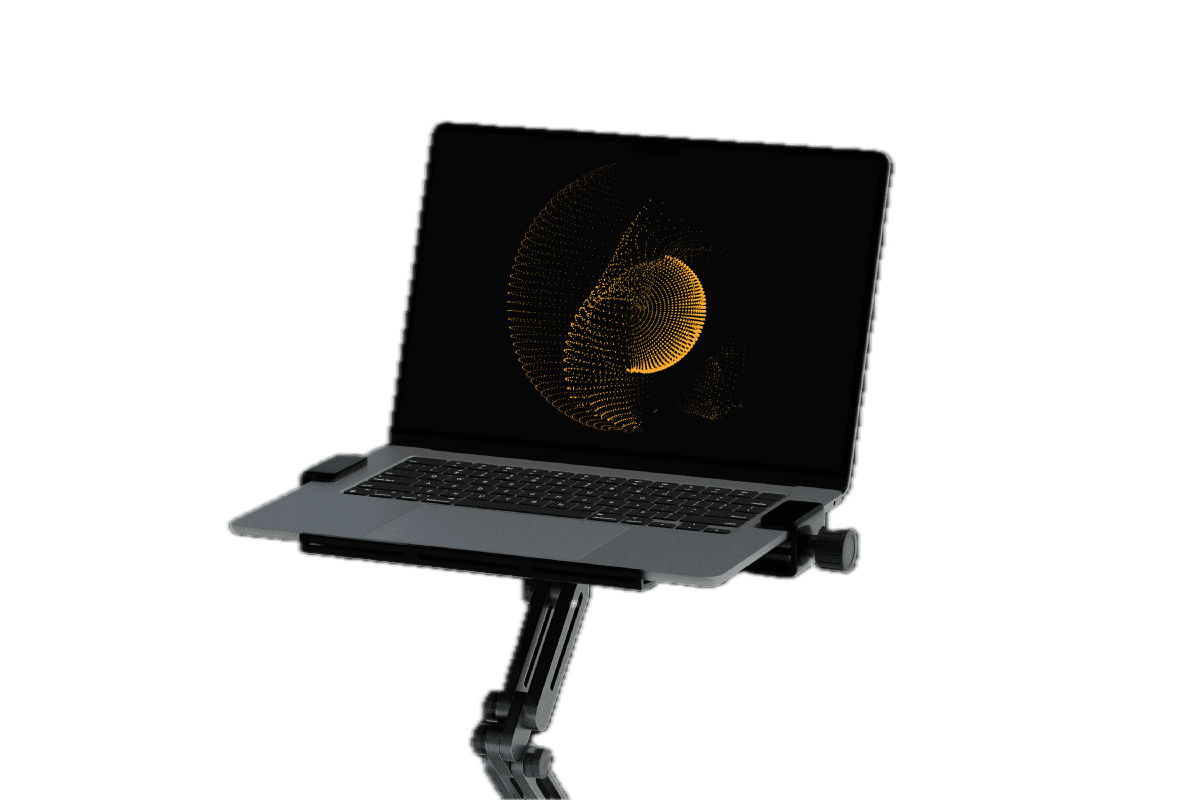
The company website did not reflect the kind of technical and creative work the agency wanted to be known for. At the same time, I was developing my master’s thesis around programming as a medium of art. The challenge was to connect both contexts into one project: a real agency website that could function as a usable business surface and as an interactive media piece.
solution
I redesigned the website around a dark, responsive interface, generative motion, and a clearer information structure. The project combined discovery, personas, wireframes, UI design, creative coding experiments, and implementation constraints. Instead of treating animation as decoration, I used it as part of the agency’s identity: a way to make code visible in the experience.
Joining an early tech agency
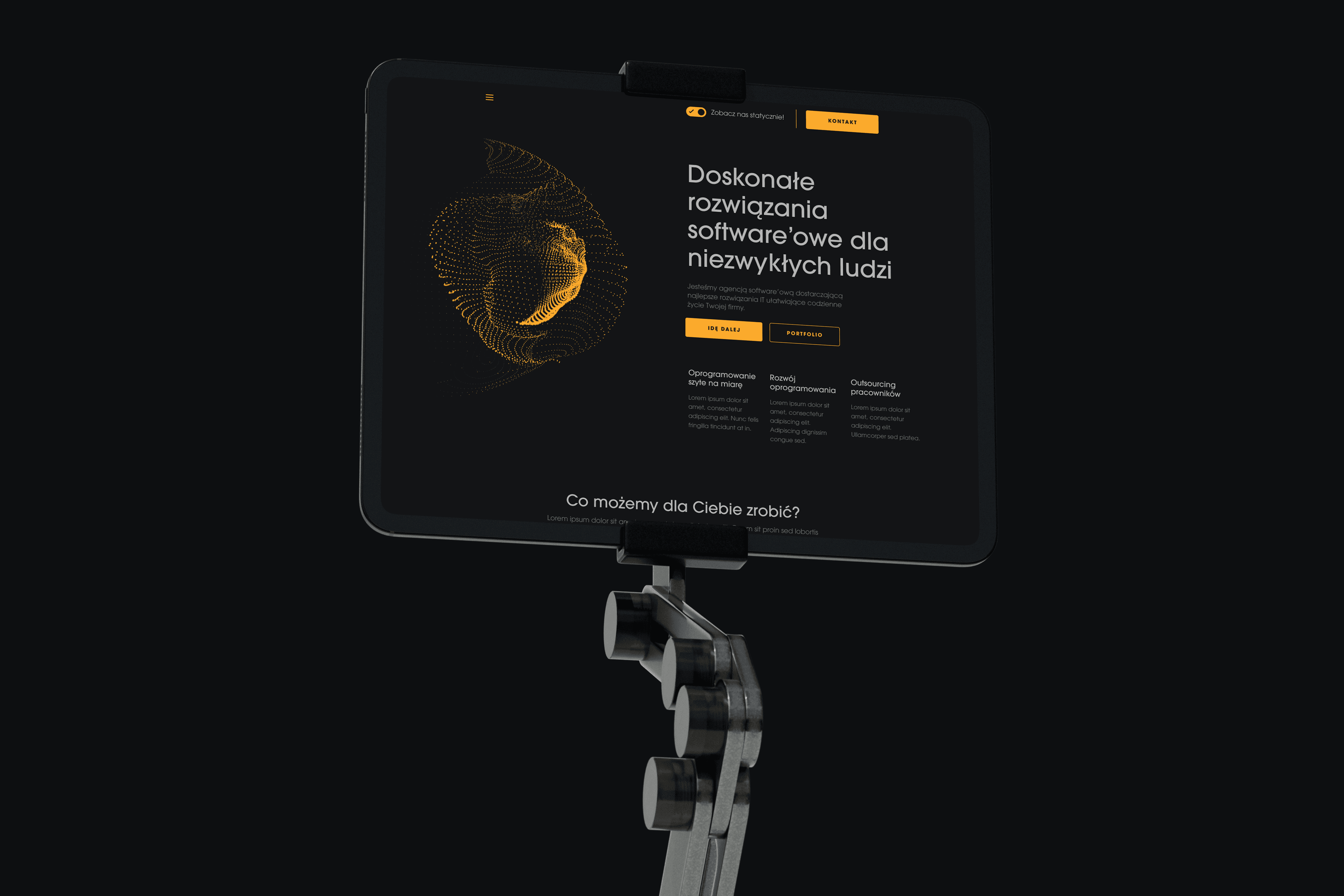
I joined iMakeable in 2021 as a UX/UI Designer, shortly after the company was founded in December 2020.
The agency’s existing website had been created by the founders, who were frontend developers, not designers. I had already pushed for a redesign, but the company initially only had enough budget for small updates, a few new pages, and light content changes.
Turning a website into a thesis
When the company reached a more stable moment, we agreed that I could redesign the website as the practical part of my master’s thesis.
My thesis topic was programming as a medium of art, so the project had to do more than present services. It needed to ask how code, motion, interactivity, and interface design could become part of the visual language of a technology company.
Researching code as a medium
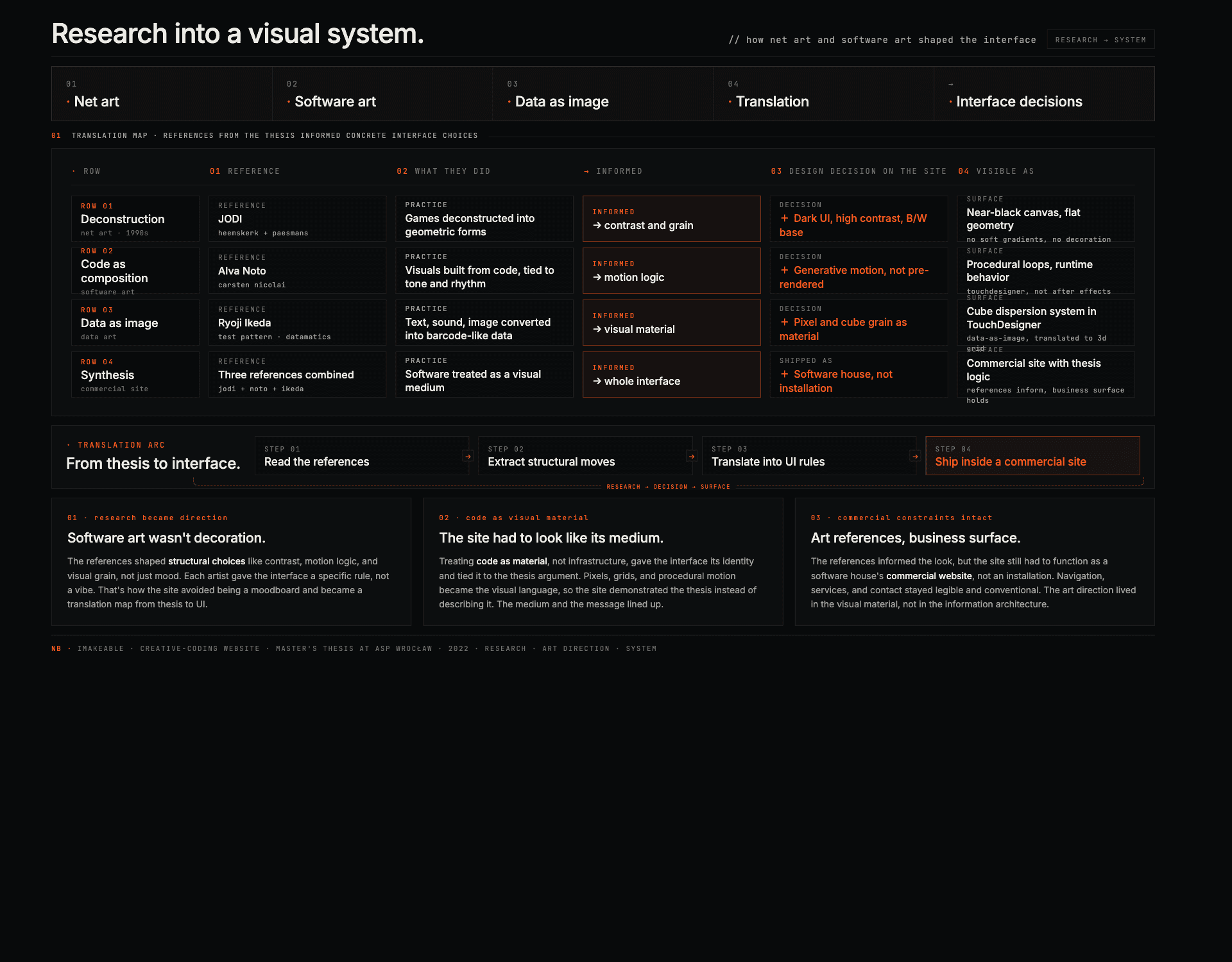
I researched artists and collectives working with software, net art, generative visuals, and code-driven systems.
This included references such as JODI, Alva Noto, and Ryoji Ikeda, whose work helped me think about software not only as a tool, but as visual material. That research shaped the final direction: dark, high-contrast, interactive, and intentionally connected to early internet and software-art aesthetics.
Designing the website structure
I started with discovery work: defining the core pages, mapping the agency’s services, and creating personas for the main audiences.
The key audiences were software-company leaders looking for outsourcing support, Polish business owners needing a product redesign, and international clients looking for a Central European development partner. That helped keep the project grounded as a business website, not only an experimental visual piece.
Moving from animation to interaction
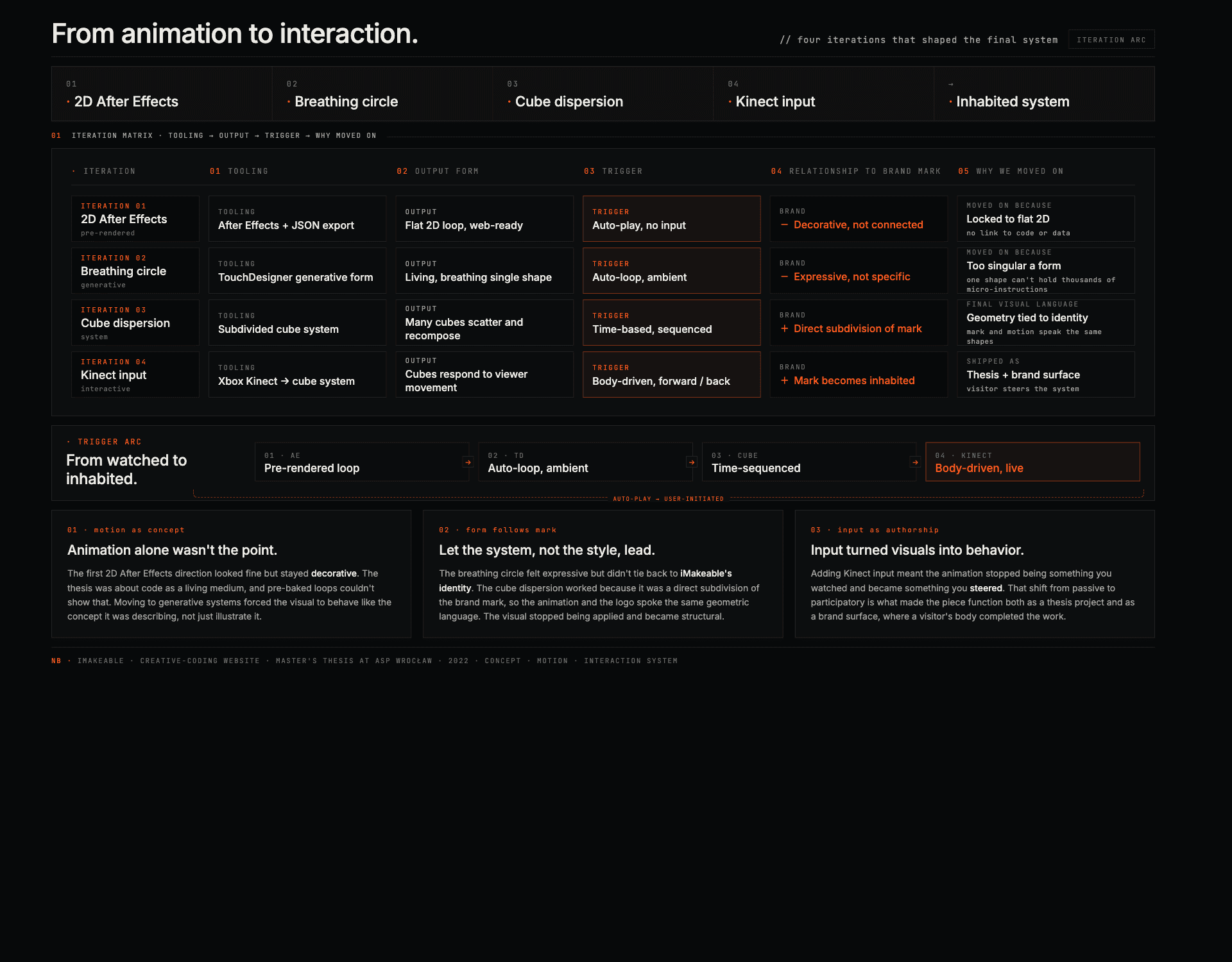
My first direction used 2D animations created in After Effects and exported as JSON, but that approach felt too static for the concept.
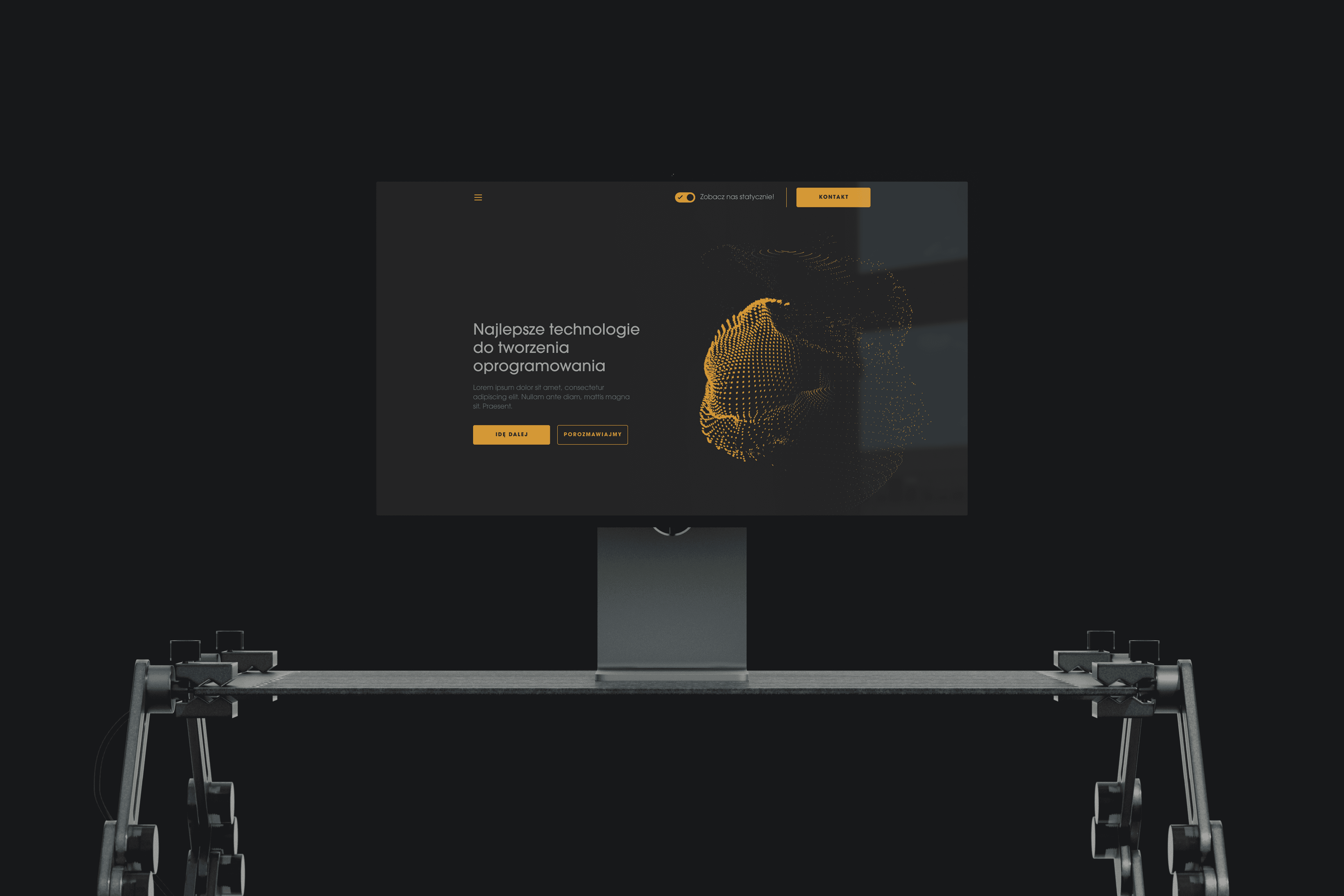
I moved into TouchDesigner and experimented with generative 3D animation instead. The final concept used small cube-like forms that rotated, dispersed, recomposed, and reacted to movement through a Kinect controller.
Working with real constraints
The project had to survive real implementation constraints.
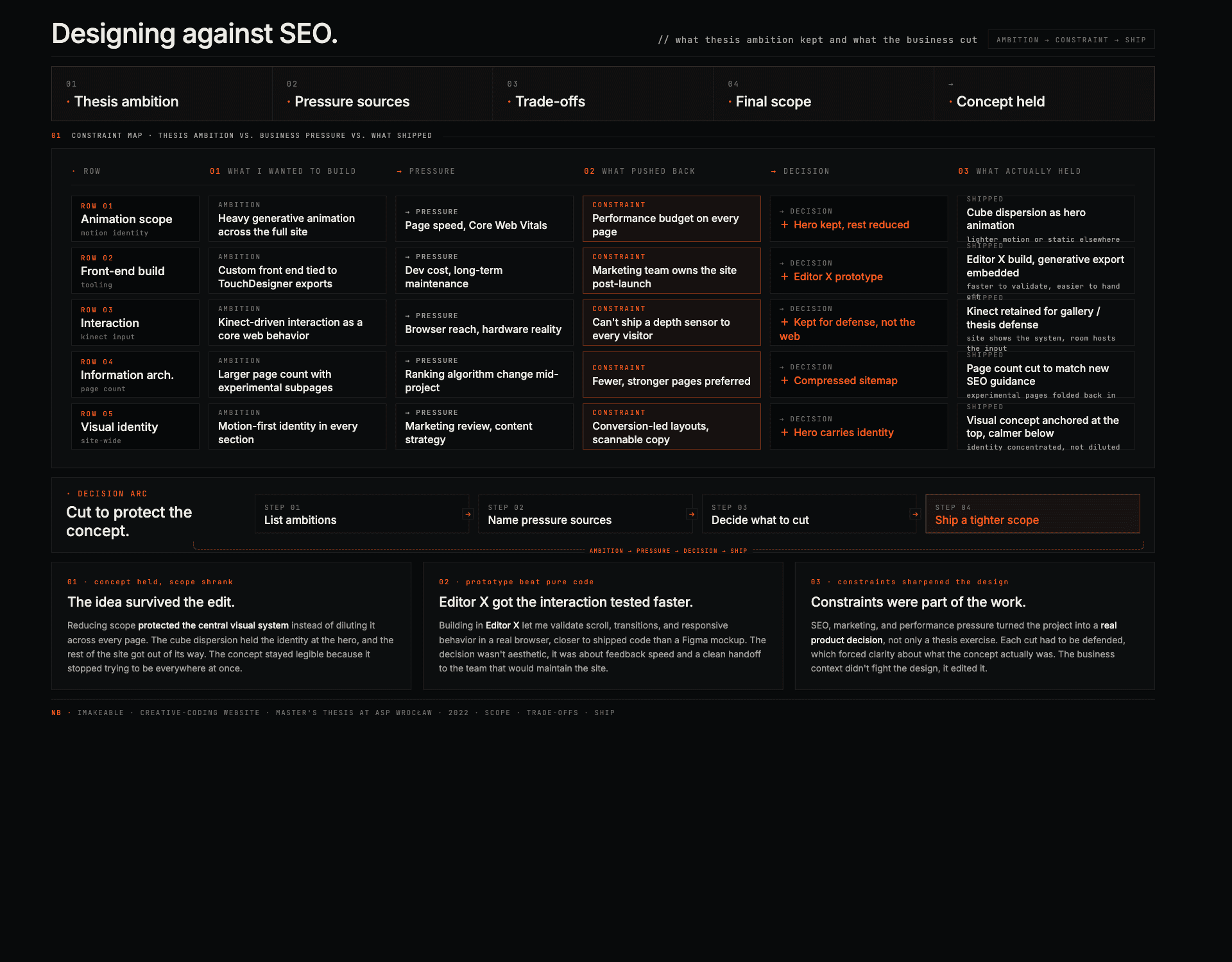
The agency’s marketing partner pushed back on heavy animation because it could hurt page speed, SEO, and business performance. I adjusted the direction, reduced the technical scope, and used Editor X to build a more realistic interactive prototype that was closer to a coded website than a static Figma mockup.
Building the final interface
The final interface used a dark visual system, high contrast, responsive layouts, and interactive transitions.
I chose a black-and-white base with vivid accent colors connected to the animation system, then designed the website directly in Editor X so I could test scrolling, transitions, and responsive behavior more realistically. The final result worked across desktop, tablet, and mobile, with most planned interactions implemented rather than only mocked.
Outcome
The project became the practical part of my master’s thesis at the Academy of Fine Arts in Wrocław.
It did not become the most technically ambitious version I first imagined. The stronger outcome was learning how to balance creative coding, UX, performance, SEO, stakeholder feedback, and business needs inside one coherent website experience.
year
2023
timeframe
6 months
tools
TouchDesigner, Figma, After Effects, Kinect
shipped in
Code
category
UI/UX
01
see also
0D0F11