Segregomat. Civic waste sorting app.
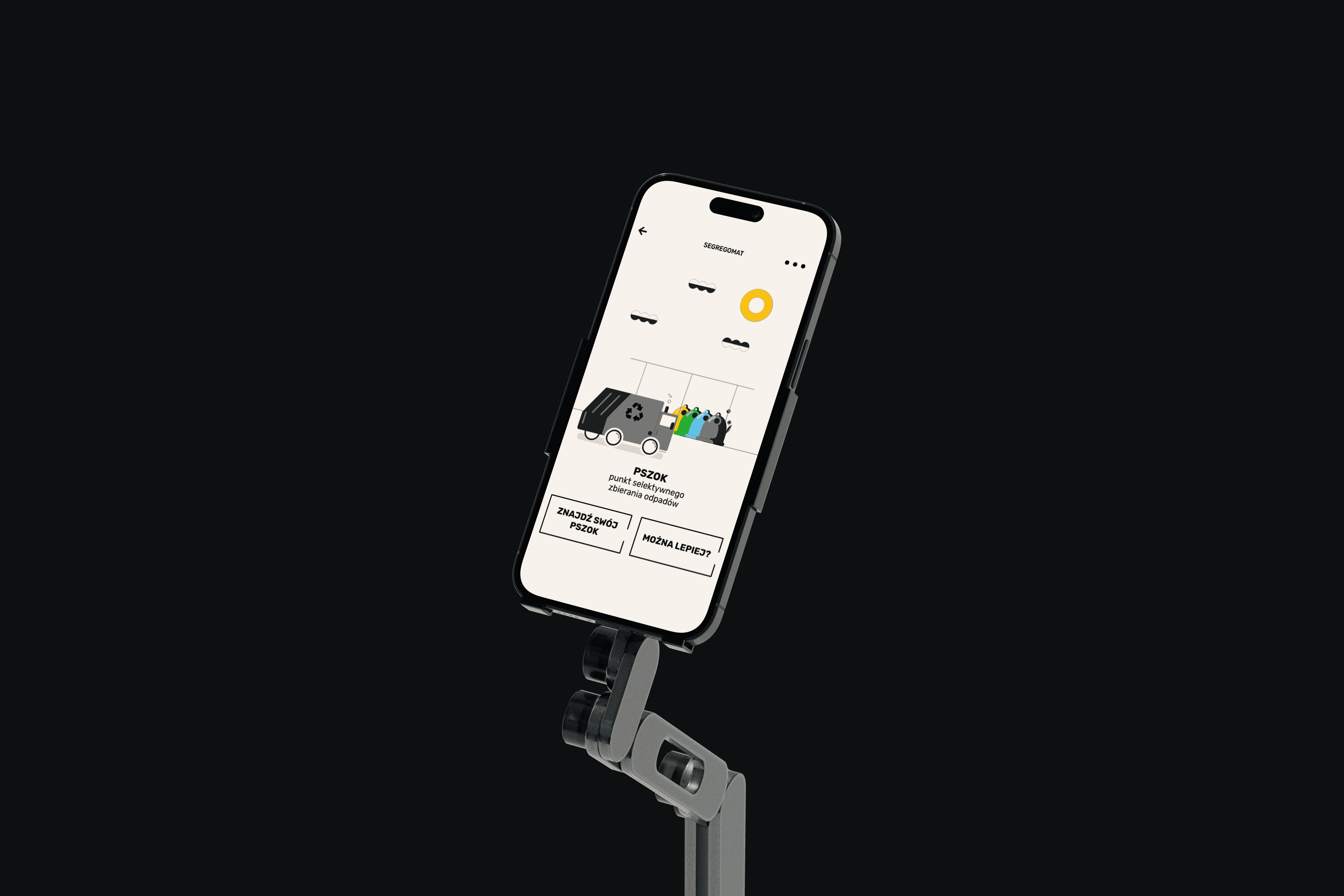
Segregomat is a mobile waste sorting app for Polish residents, with barcode lookups, accessible visual cues, and integration with city collection schedules. Solo concept, design, and brand. 2020.
00
problem
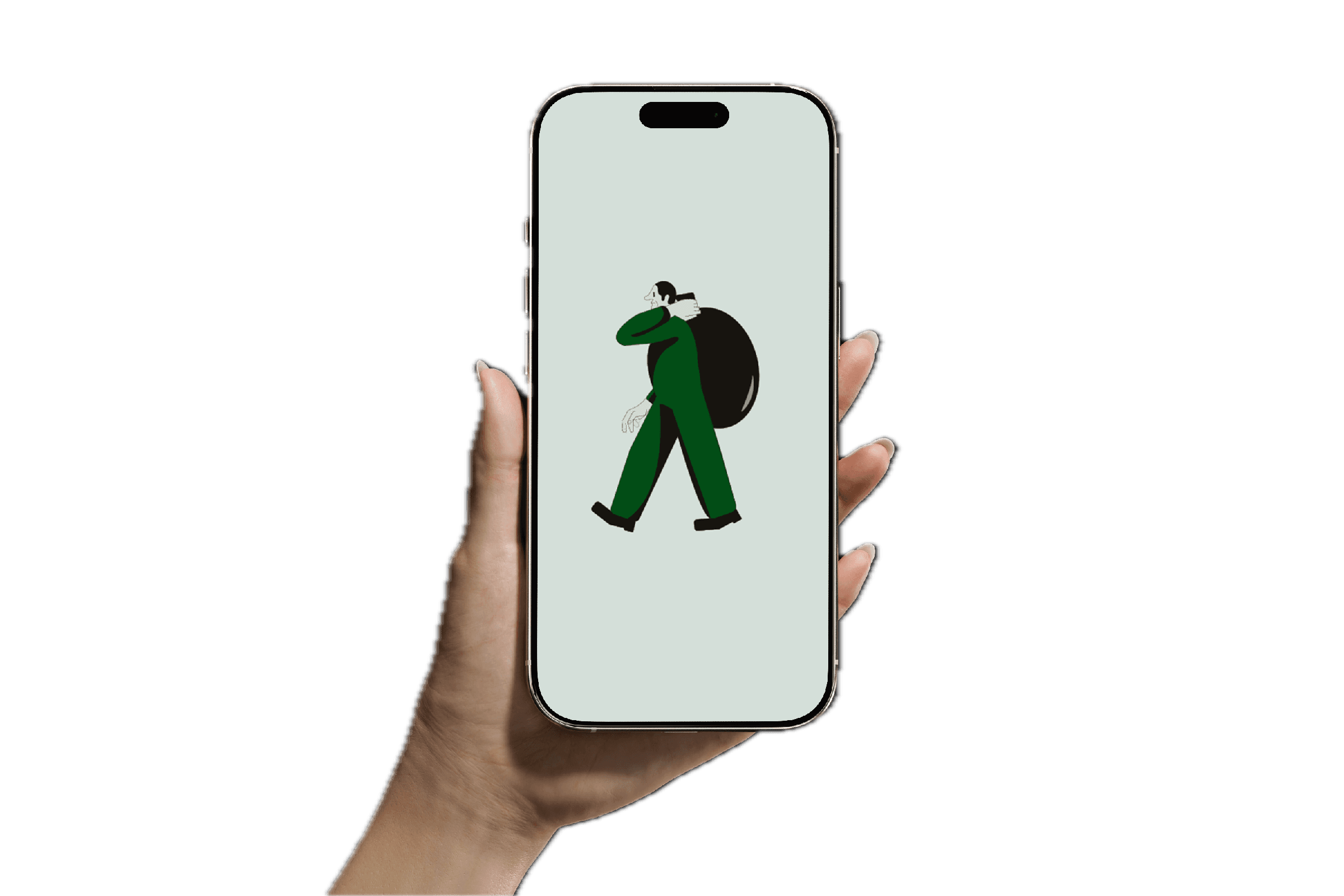
Sorting waste in Poland is harder than it should be. The rules are not intuitive. Greasy pizza boxes go to general waste, not paper. Electronics and furniture need special collection on schedules buried inside outdated municipal websites. People want to recycle correctly and cannot figure out where things belong. The result is contaminated recycling bins and residents who have held onto a broken sofa for six months because they never found out when the city picks it up.
solution
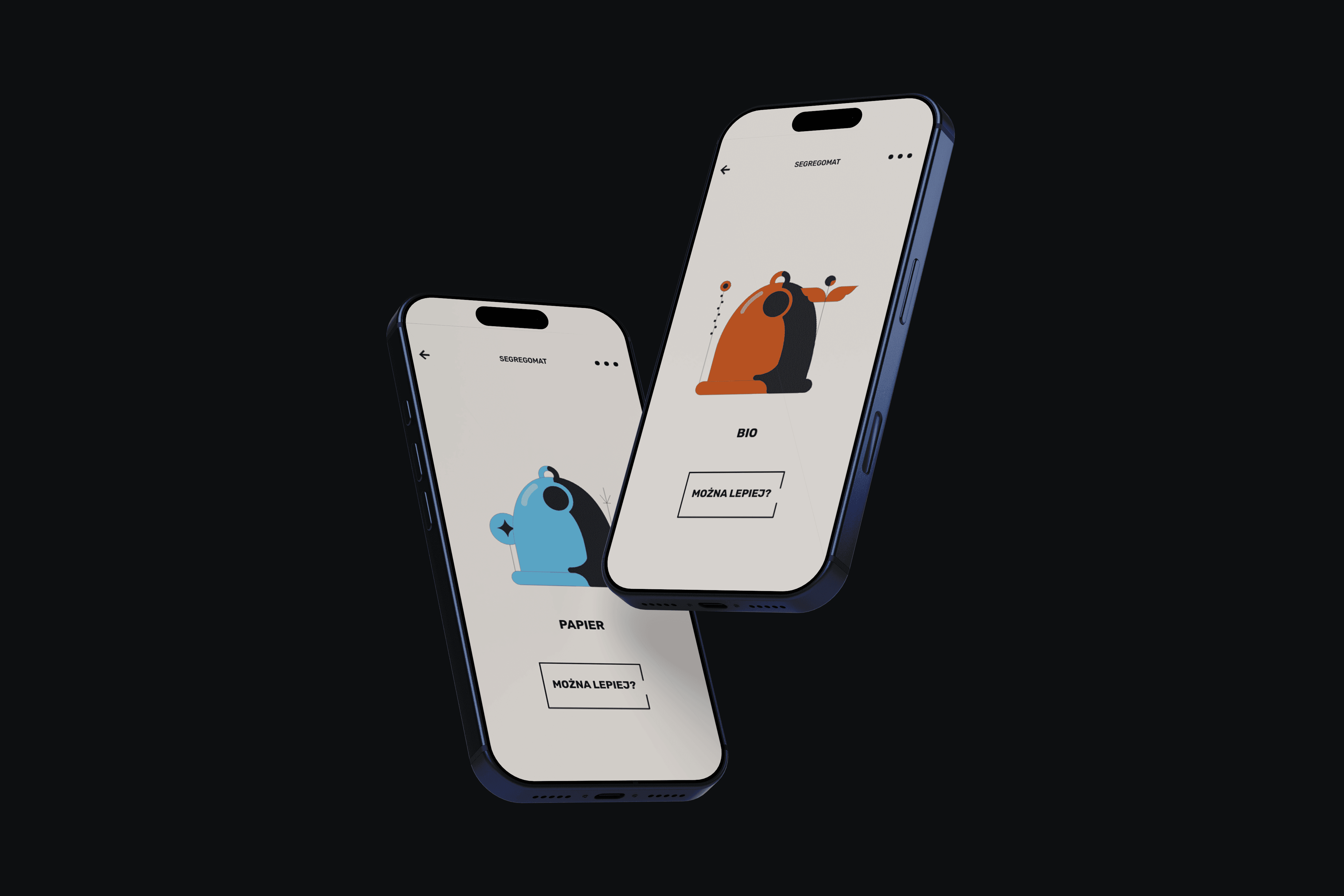
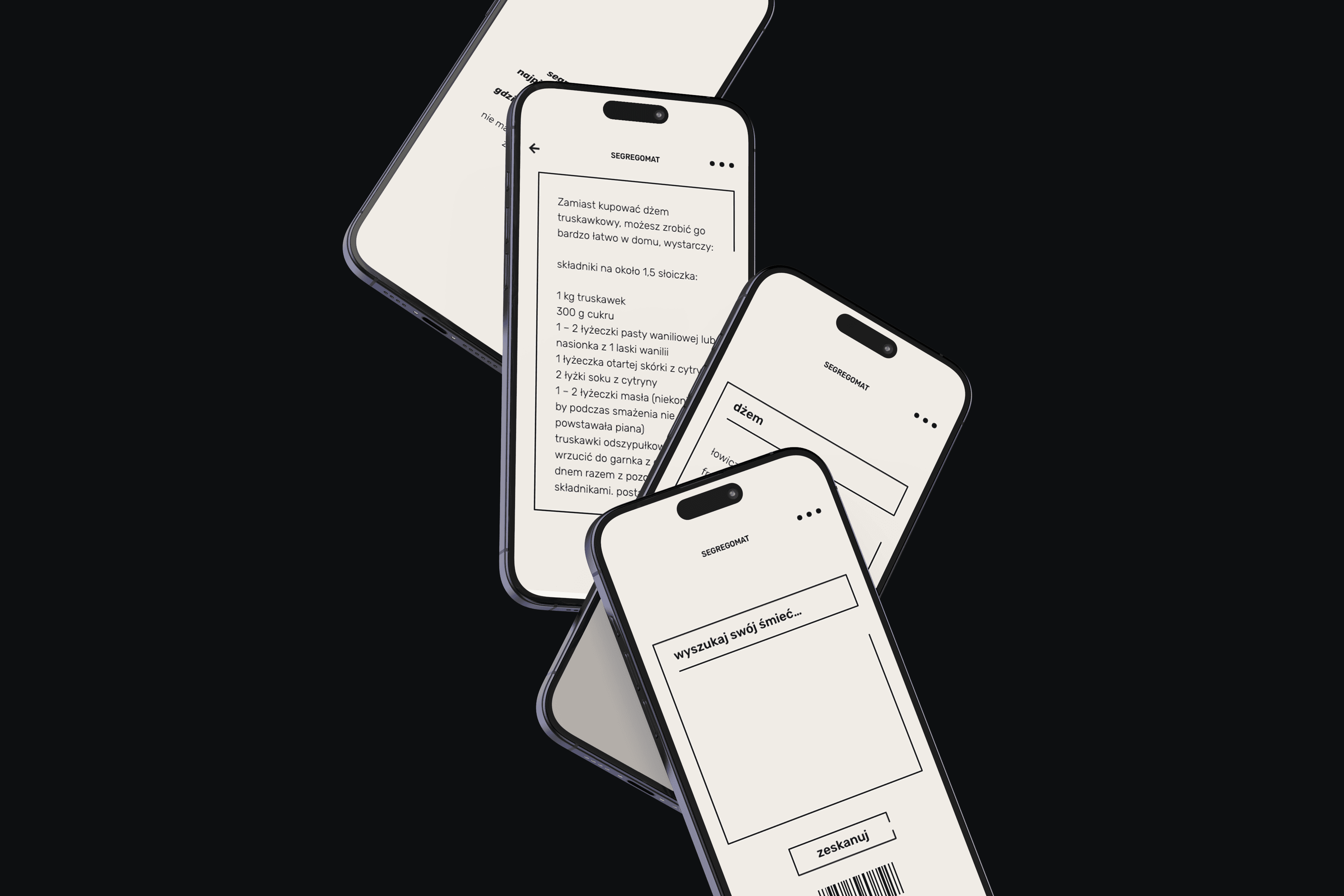
Segregomat is a mobile app that gives instant answers on how to dispose of any item, with barcode scanning, a taxonomy of synonyms for how people actually describe things, and integration with city collection schedules for bulky waste. Bin colors lead the interface so the app works for kids, elderly users, and people who are not confident readers. Accessibility was designed in from day one, including screen reader support and color-blind review.
Why I built it
This was my own idea. Poland had nothing like it in 2020, and the problem was something every resident in the country had opinions about. I decided to build it solo as a concept project, fully self-directed, from the first sketch through brand, motion, and a working prototype.
50+ interviews before a single screen
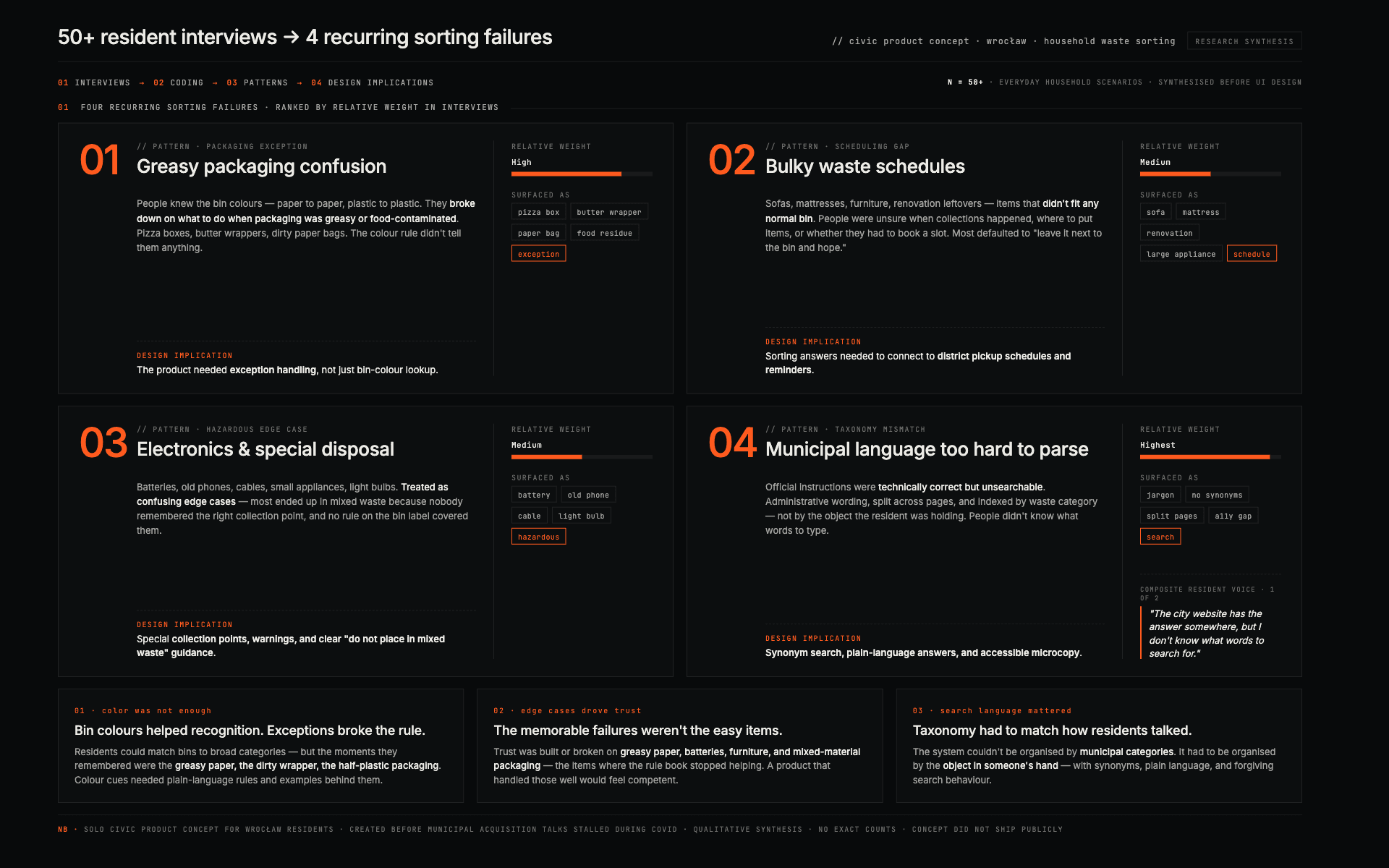
Research came first. I ran over fifty interviews and observations with residents across age groups to understand where sorting actually broke down. The patterns were consistent. Tricky items like greasy packaging caused the most daily confusion. Exceptions to the general rules were not communicated well. The biggest recurring pain was bulky waste, where people simply did not know the collection schedule for their neighborhood and could not find it without wading through a municipal site that looked like it had not been touched since 2008.
Content structure as the product
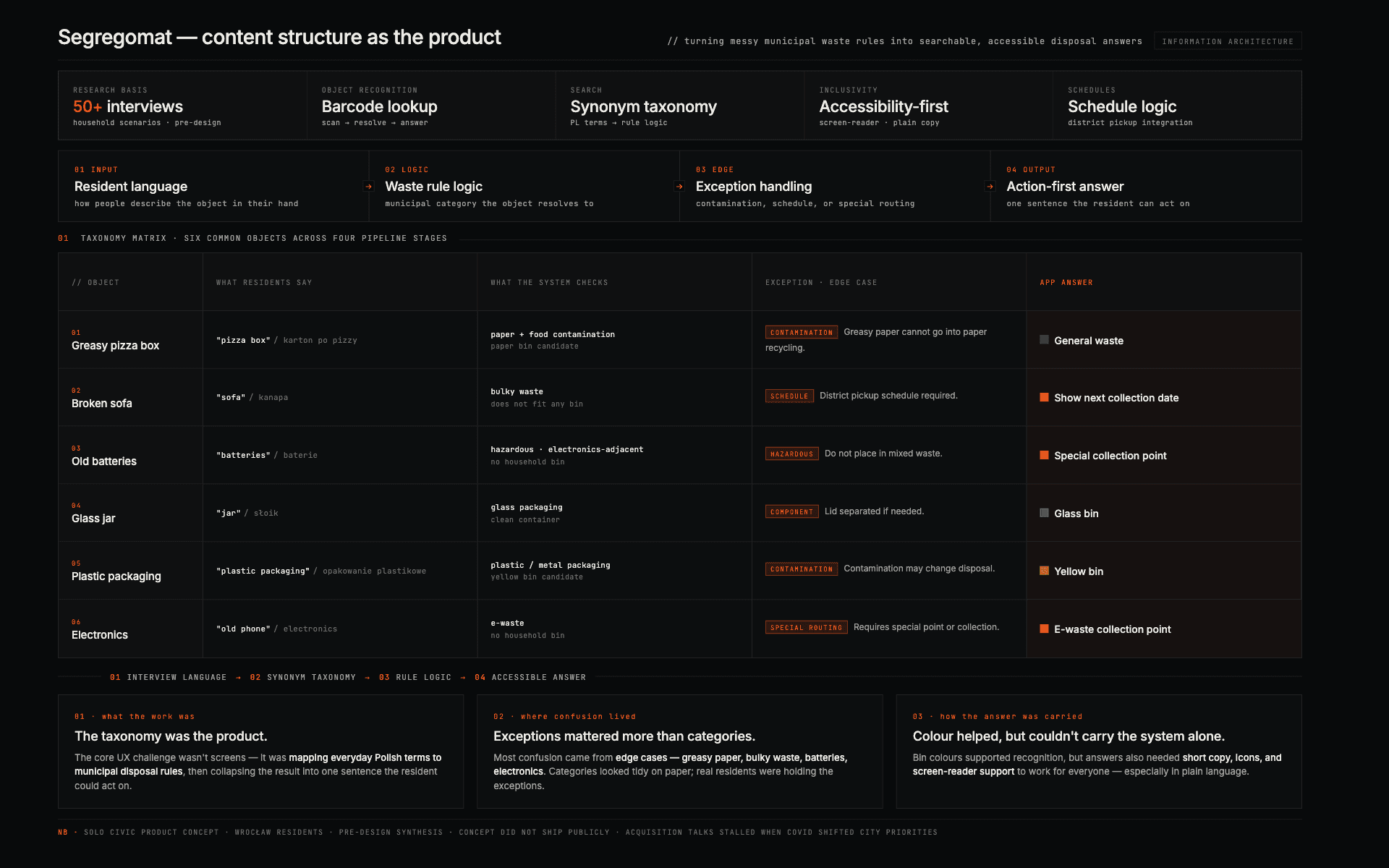
The taxonomy was the real product. I organized items by category, added synonyms to match how people describe things in Polish daily life, and built in exception rules for edge cases. Bin colors led the UI so the visual cue arrived before the text, which made the app legible for children, elderly users, and anyone skimming in a hurry. I kept copy short and action-first, focused on what to do rather than explaining the rules at length.
Accessibility as a first principle
Because the audience was literally every resident, accessibility could not be a finishing touch. I tested with screen readers and ran color-blind reviews to make sure the visual system held up when color was not available. Tone had to work across age and literacy levels, so the copy stayed simple and friendly without feeling dumbed down.
City schedule integration
I designed the integration with the city's waste management schedule database so residents could see exactly when special collections were happening near them. This was the piece that solved the six-month-sofa problem. No more calling city hall, no more guessing, no more waiting indefinitely.
The acquisition that did not happen
The city of Wrocław saw the project and wanted to buy it and adopt it as an official municipal tool. We got far enough into the conversation for it to feel real. Then Covid hit, the city's budget and priorities shifted, and the deal quietly stopped moving. The project is not live today.
What it proved
The app is not shipped, but the work stands. A solo designer built something compelling enough that a Polish city of 640,000 people wanted to acquire it. The research, the taxonomy, the accessibility work, the motion system, the brand, all of that held up to scrutiny from people who would have had to pay for it and put it in front of their residents. That is the signal I care about.
year
2020
timeframe
6 months
tools
Tools: Figma · Illustrator · Character Animator
shipped in
concept · acquisition talks with Wrocław (stalled by Covid)
category
UI/UX · Civic tech
01
02
see also
0D0F11