Travel & Transportation Integration
Bridging travel booking and ground transportation through a seamless API integration that keeps users in their journey.
00
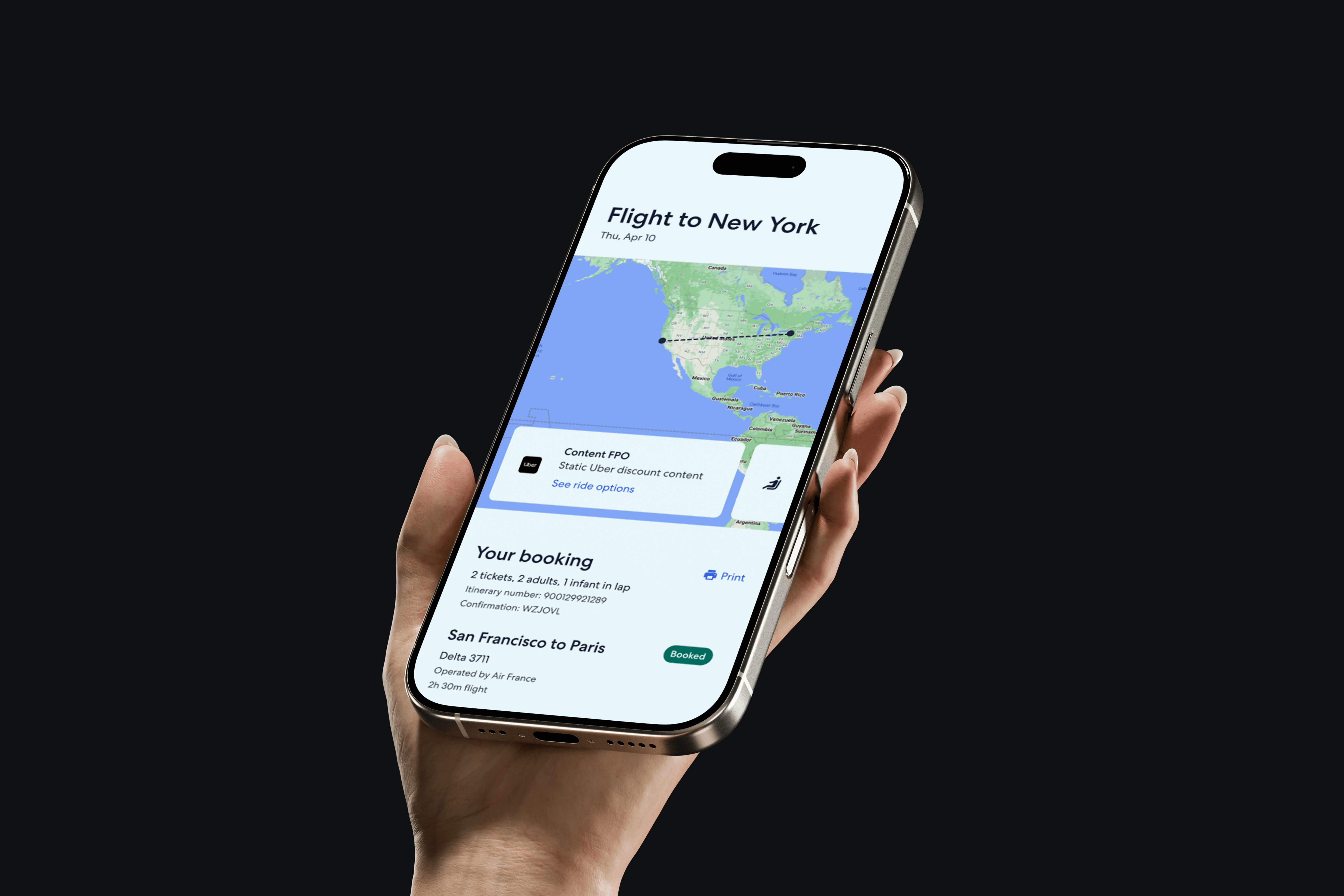
problem
Planning a trip shouldn't feel like juggling multiple apps. Expedia users were booking flights and hotels without a problem, but when it came time to arrange airport transportation, they had to leave the app entirely. This gap in the journey wasn't just inconvenient. It was costing conversions. Every time someone switched over to Uber or Lyft to book a ride, there was a chance they wouldn't come back to finish booking their hotel or complete other parts of their trip. The disconnect was clear: people wanted a complete travel solution, not a collection of separate tasks across different platforms.
solution
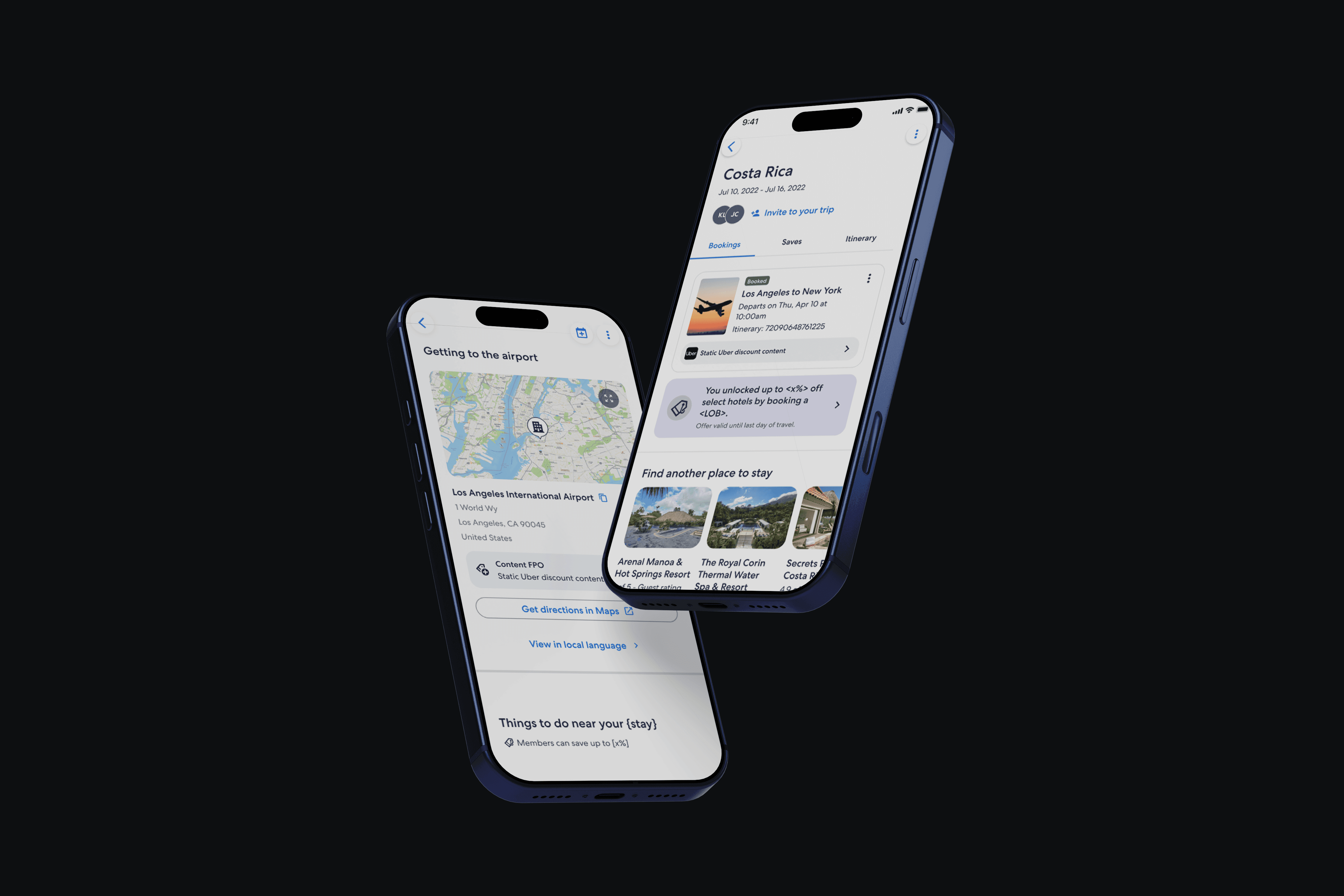
Expedia partnered with Uber to integrate ride booking directly into the travel planning experience. Instead of forcing users to context-switch, the integration brings Uber's transportation network into Expedia's ecosystem. Users can now book flights, reserve hotels, and arrange airport pickups without leaving the app. The solution respects both companies' brand identities while creating a seamless handoff that keeps travelers focused on their journey rather than managing multiple platforms.
The challenge was making two distinct corporate design systems work together.
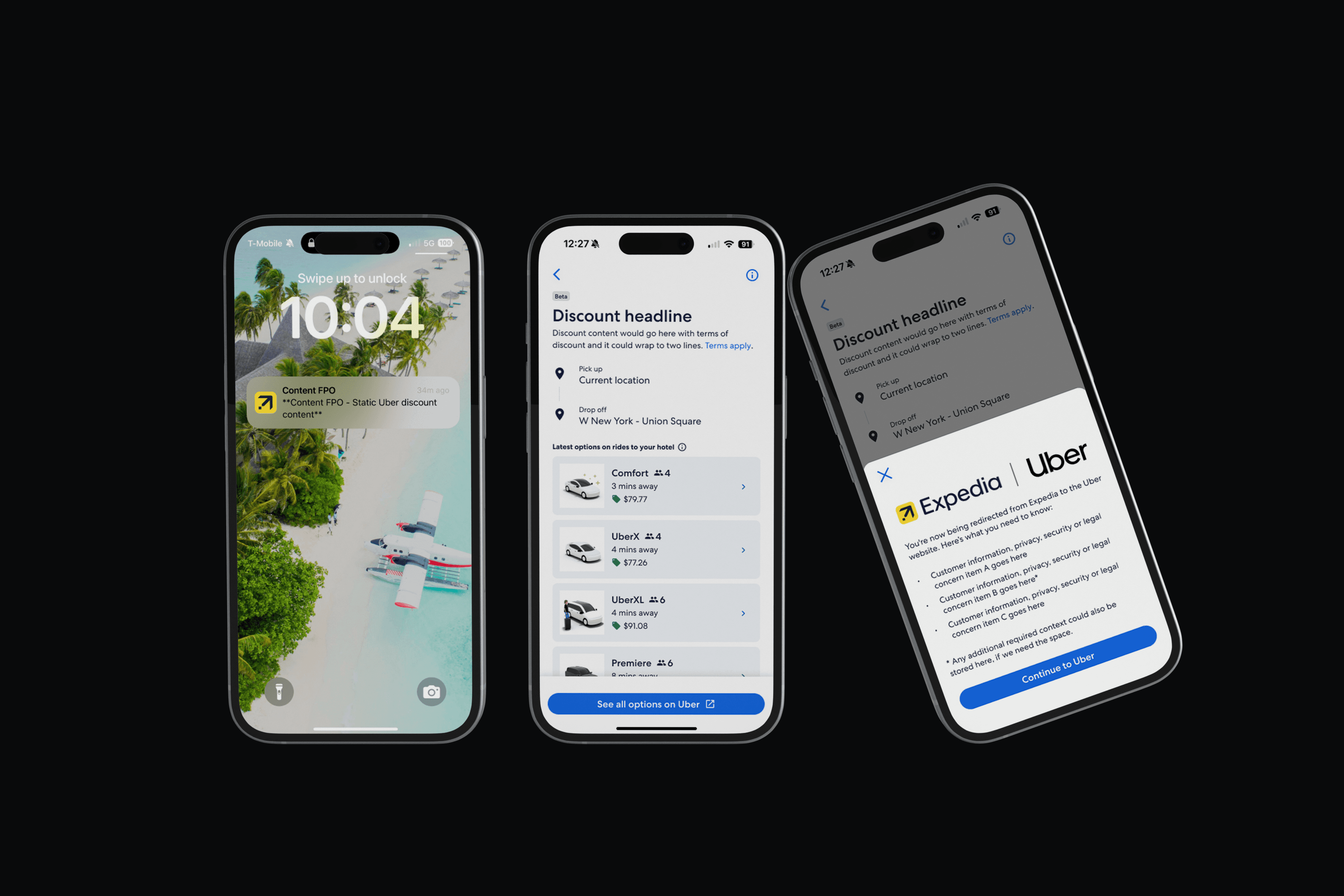
The collaboration began with a strategic decision to launch in the US market first, where regulations around ride-sharing were more straightforward. I led the design work on a two-person team, handling the visual and interaction design while my partner focused on the technical aspects of the API integration. The challenge was making two distinct corporate design systems work together. Uber's interface is minimalist and corporate, built around black and serious tones. Expedia's is the opposite: colorful, approachable, designed for the excitement of travel. Neither company could compromise their brand, which meant the solution had to honor both visual languages.
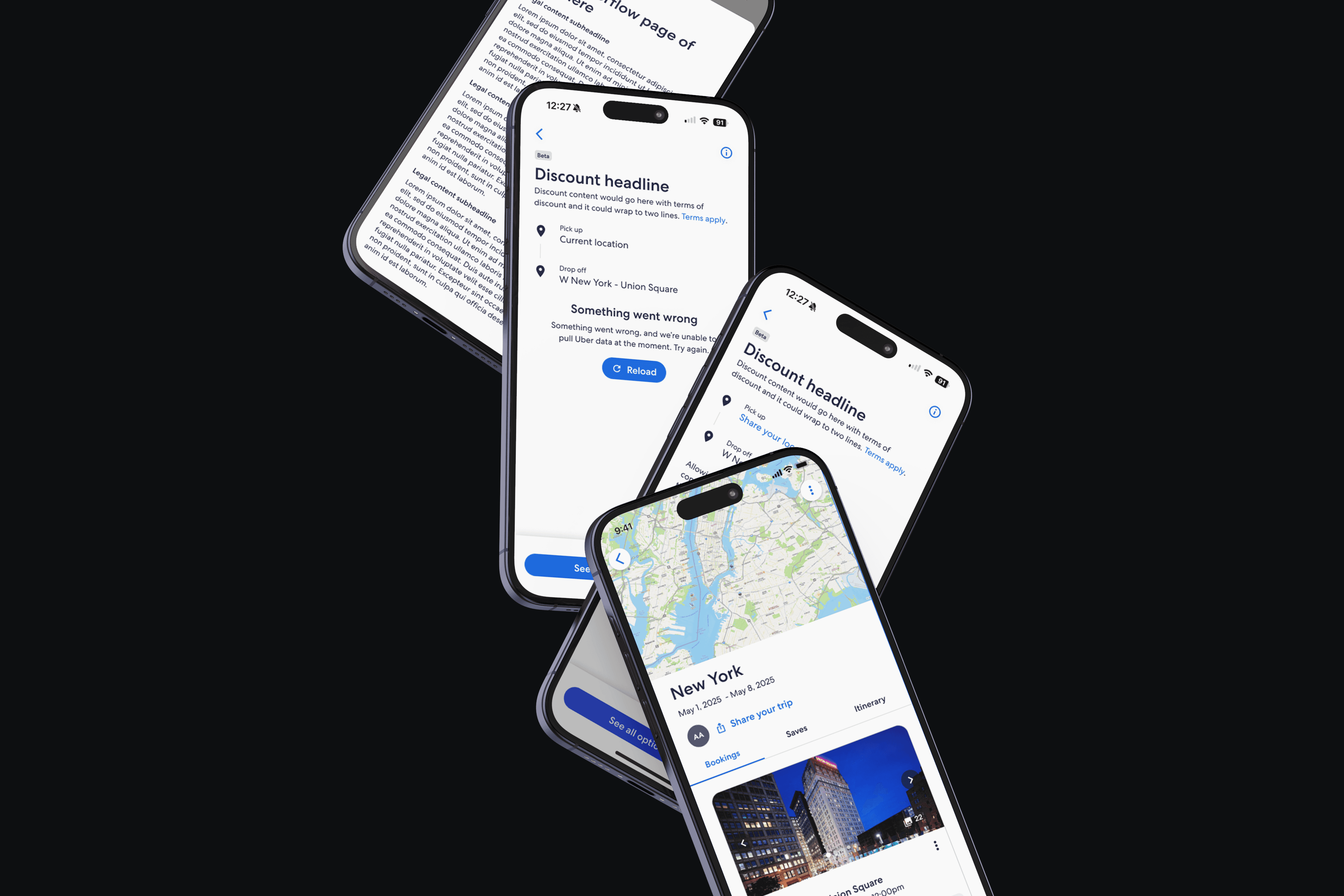
Beyond the design constraints, the legal questions were equally complex. Who processes the payment? What happens if a card gets declined during booking? How do you handle location permissions when users haven't shared that data with Expedia? These weren't just technical questions but business decisions that required constant coordination between two massive organizations with established processes and rigid frameworks.
We ran extensive user testing to understand how people expected the flow to work and where the transitions felt awkward. The trickiest decision came down to containment: should everything stay within Expedia, or should users be redirected to Uber at some point? After weighing the legal implications, the business team made a strategic call to build what's essentially an Uber interface inside the Expedia app. This approach let Uber retain legal responsibility for ride transactions while keeping users in Expedia's ecosystem throughout their booking journey.
Making two corporate design systems coexist was one of the more rewarding aspects of the project. It required patience, clear communication across teams, and creative problem-solving within tight constraints. The integration shipped successfully. While another team handled post-launch research, early feedback indicated that users appreciated not having to leave the app. Keeping people in one place for their entire trip turned out to be exactly what they wanted.
01
02
see also
0D0F11